Proteins shape is constantly changing in response to a variety of biological processes. For example, a protein may be folded into a compact shape and then open up to grab a molecule such as a drug. Predicting what change occurs when you observe proteins behave in an experiment can be difficult. This is because intermediates between two states are by their nature transient, and therefore difficult to observe.
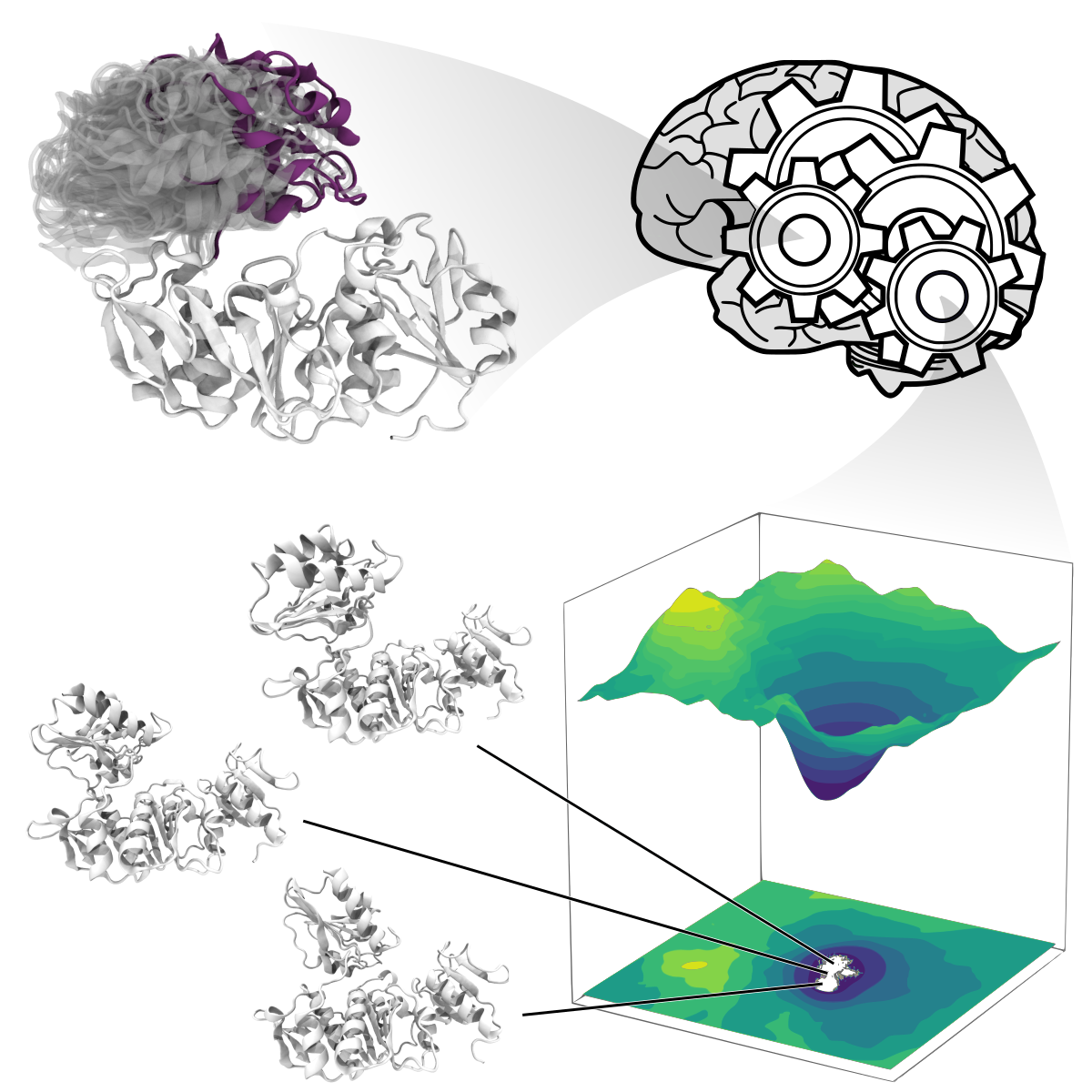
In collaboration with Chris Willcocks in Durham University, We have trained a neural network on protein shapes generated by molecular dynamics simulations, and then asked it to predict possible protein intermediate conformations. We demonstrated that the system can generate conformations that are both physically plausible and close enough to known intermediates. The convolutional architecture of our neural network can accommodate any protein, without the need of being customised. One added advantage that comes with this architecture is transfer learning, which can assist with training on a sparse dataset by first exposing the neural network to a related richer dataset.
This blog post was written with the help of a neural network, that also decided on the title.

 Degiacomi research group