Blog

Data Jam

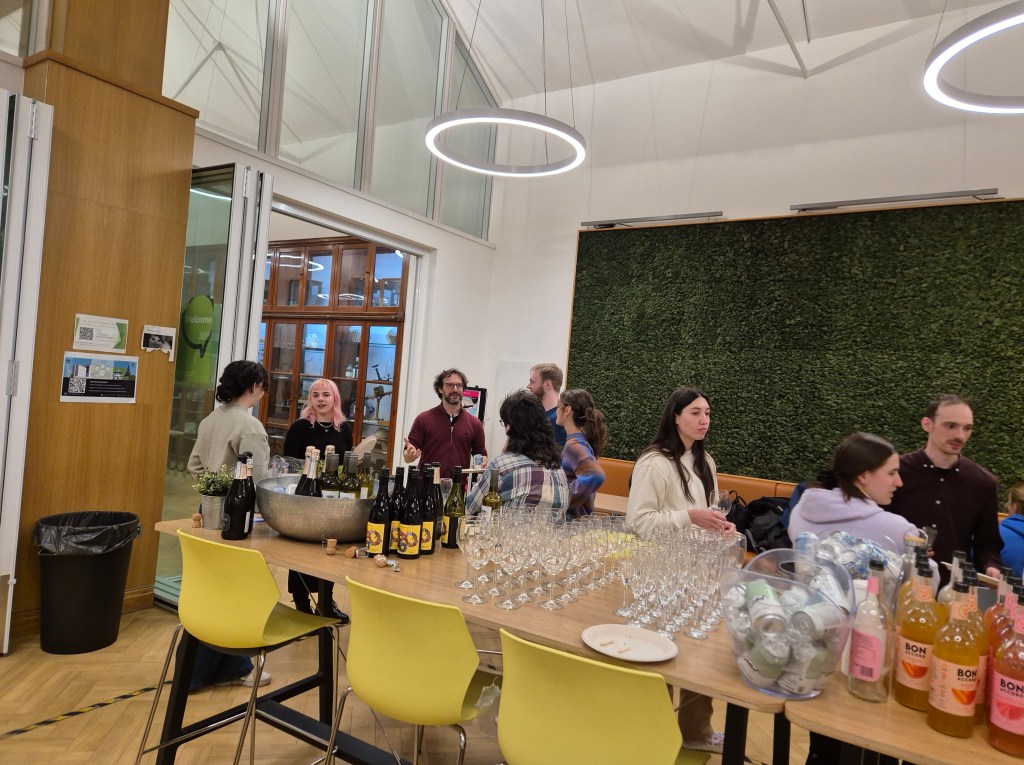
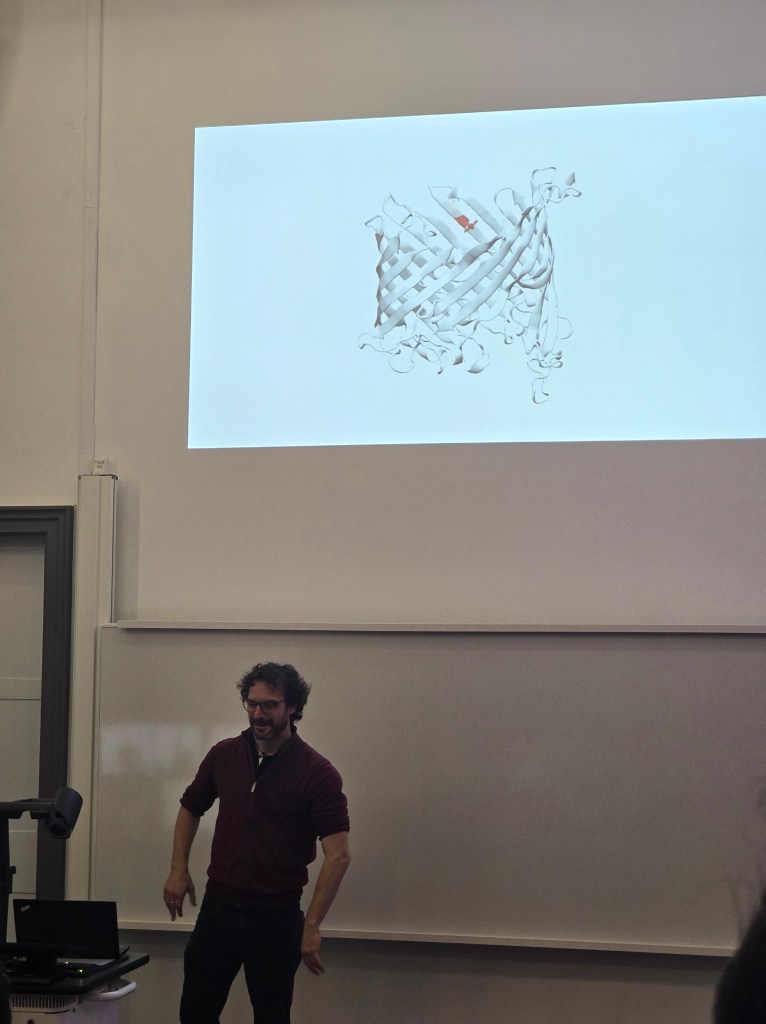
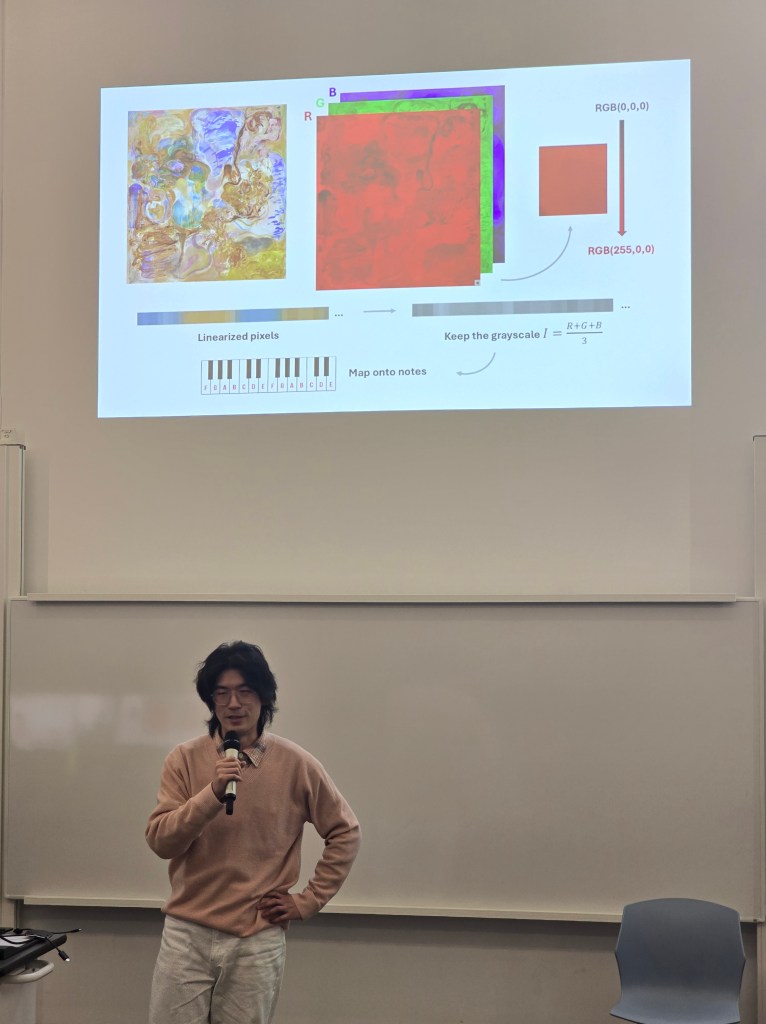
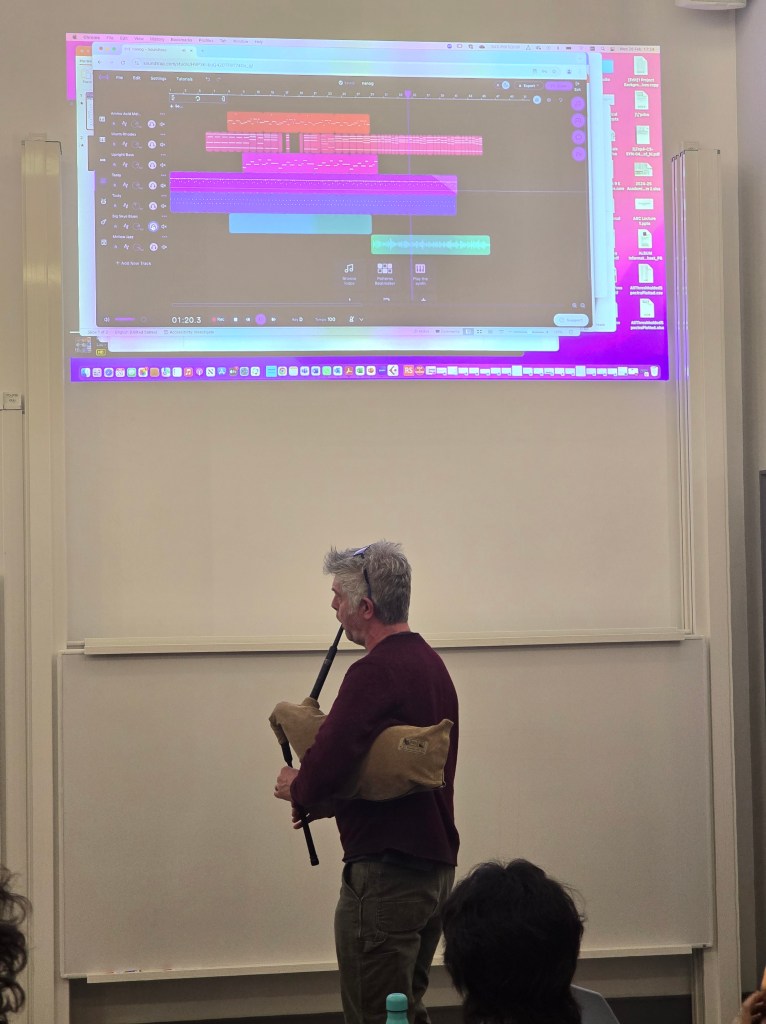
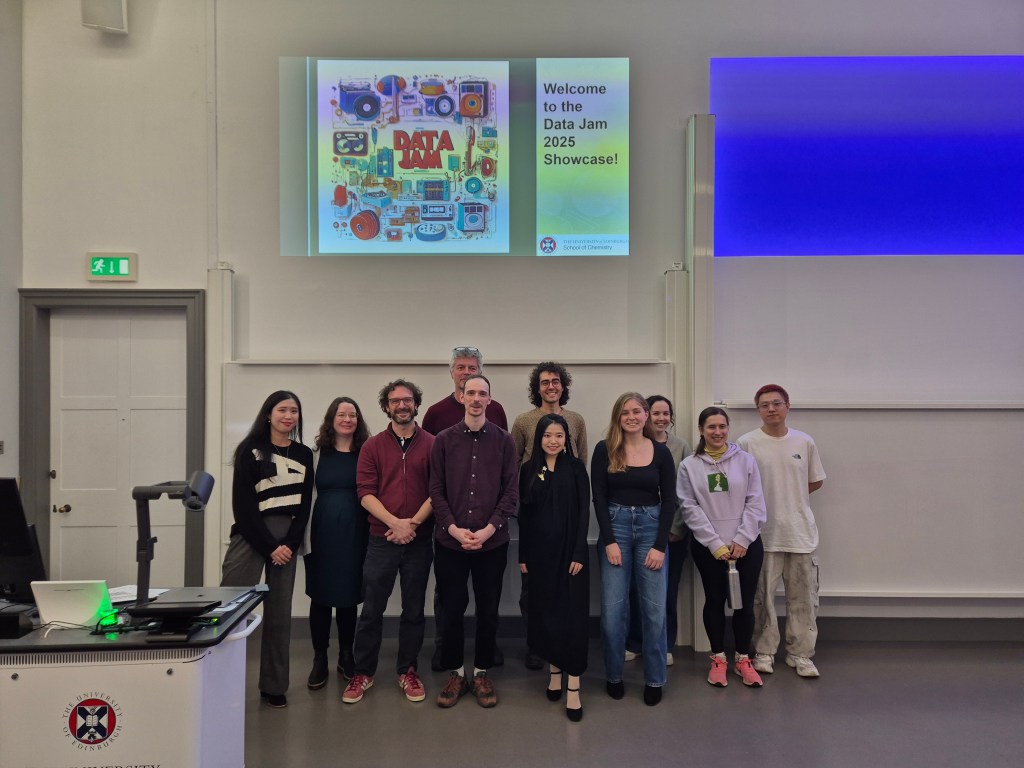
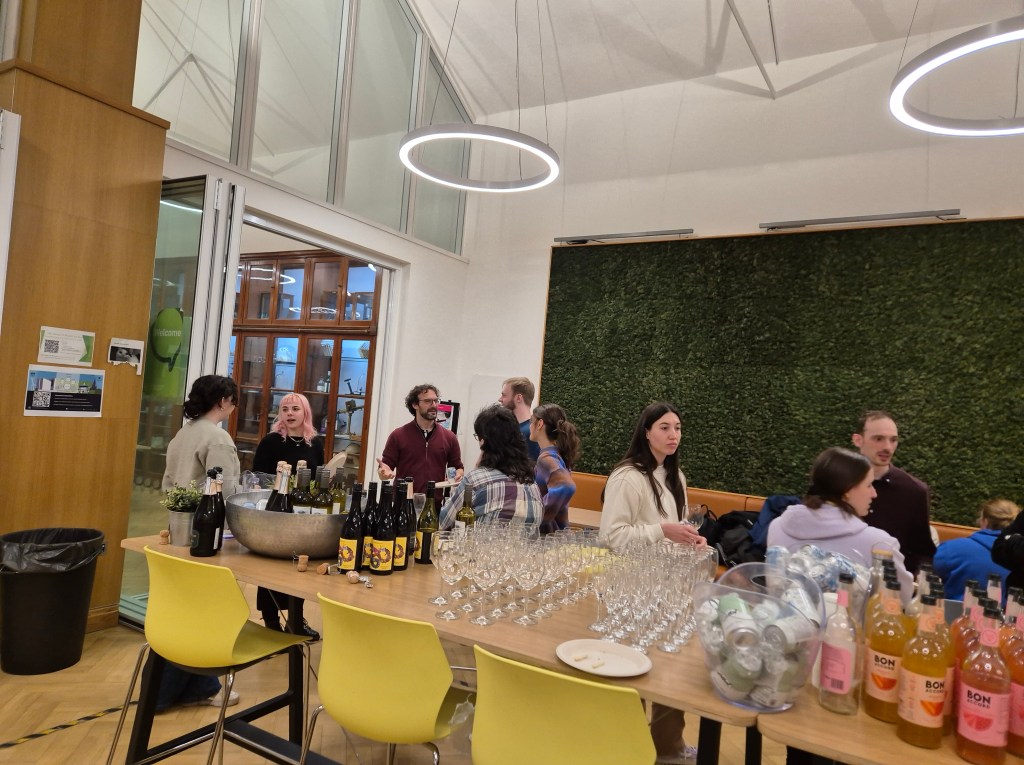
Fun event at the School of Chemistry! Before Christmas, participants to the Data Jam workshop worked on finding creative ways to convert data into music. On Wednesday 5 March, it was showcase time! Among the 10 demonstrations we had acts as different as a bagpipe accompanying a protein sequence, a soundscape of a lab, and the sound of a soil sample. The event also featured Ryan, who converted the RGB of a painting into music, and Matteo, who played a Ramachandran plot!

Two PhD studenthips available

Two PhD positions are available, for a start in 2025.

  • a fully funded PhD position in AI for protein modelling is available within the School of Informatics. Building upon machine learning models and software developed in the Degiacomi group and others (e.g., molearn, BOLTZ-1, BioEmu, …), the student will develop methods to rationalise experimental data yielded by experimental techniques (e.g., mass spectrometry, small-angle x-ray scattering), reporting on proteins structure, dynamics, and assembly.
  • a competitive PhD positions in modelling glycoprotein interactome, funded by the EastBio Doctoral Training Partnership, within the School of Chemistry. The student will leverage molecular dynamics simulations to characterize the flexibility of proteins and glycans, and develop models to estimate which binding sites a glycan could reach. By estimating the spatial reach of glycans, the student will develop detailed models of glycosylated protein-protein interactions that better reflect in vivo biology.

People news

Congratulations to…

  • Hannah Lydon, who graduated with a L4 project dedicated to profiling our JabberDock protein-protein docking engine. Hannah has now started her PhD studies at King’s college London.
  • Cameron Stewart, who graduated with a L4 project on assessing the ability of molearn to generate protein bound states from simulations of their unbound state. Cameron now works at Ocado.
  • Yuxi Liu and Jamie Luo who, under the co-supervision of Prof. Martin Cann in Durham’s Department of Biosciences, obtained postgraduate degrees in data science with projects dedicated to the prediction of lysine carbamylation sites using neural networks.

Welcome to…

  • Marco Mattia who, under the main supervision of Dr. Antonia Mey at the University of Edinburgh and funded by the SOFI2 CDT, started a PhD on the usage of generative models to characterize the conformational spaces of disordered proteins.
  • Asal Azar, who started a PhD on the usage of generative models to characterize protein conformational spaces.
  • George Weston who, co-supervised by Prof Martin Cann and sponsored by the BiSCOP CDT, started a PhD on the characterization of protein carbamylation sites.
  • Mateusz Wiszniovski, who started a L4 project on the usage of molearn to predict transition states between protein conformations.
  • Louise Persson, visiting PhD student from the Marklund group at the University of Uppsala and funded by a Matariki fellowship, working on the identification of protonation sites on proteins subjected to nano-electrospray ionization.

molearn: neural networks vs protein dynamics

Do you want to design, train, and test a neural network with protein conformational ensemble? This is quite fiddly, especially if you want the training to talk to a molecular dynamics engine. This is why we are now releasing molearn, a Python package streamlining the whole process. Among its many perks, molearn offers the possibility of talking directly to OpenMM’s backend. Have look here!

Conferences time!

Phew, this has been a busy month! We started with the CCPBioSim conference in Leeds, with presentations by Matteo and Gudong, and posters by Cameron and Ryan. Ryan won an award for his work on combining molearn models with transition path sampling, congratulations!
Then, Marco and Ryan attended the CCP5 Summer School, where Matteo taught Machine Learning for the analysis of MD simulation data. Finally, on to EBSA conference in Stockholm, with Sam presenting his work on the new molearn package.

PhD studentship available!

A fully funded PhD studentship in the area of machine learning protein conformational spaces is currently available. The student will work on developing molearn, our generative neural network trainable with protein conformations generated via molecular dynamics simualtions or experiments.

To apply, please follow this link. For informal enquiries, please contact Matteo (matteo.t.degiacomi[AT]durham.ac.uk).

Structure and dynamics of a pore-forming toxin

Our work, in collaboration with the Zuber and Posthaus groups in the University of Bern, was just published in EMBO Reports (well done Julia Bruggisser and Ioan Iacovache for the beautiful cover image!).

We investigated the structure, dynamics, and properties beta-toxin, a protein part of the offensive arsenal of Clostridium perfringes bacteria. This protein assembles according to a unique architecture, featuring beta-barrels at both ends. Calculations from Samuel Musson on the newly discovered atomic structure reveal that the toxin should be marginally selective to cations, and that the solvent-exposed barrel is remarkably flexible.

We conclude that beta-toxin could be suitable candidate for small molecule sensing or selective molecule delivery and transport.

Reference:  J. Bruggisser, I. Iacovache, S. C. Musson, M. T. Degiacomi, H. Posthaus, B. Zuber (2022). Cryo-EM structure of the octameric pore of Clostridium perfringens β-toxin, Embo Reports

People news

Congratulations to…

  • Louis Sayer, who graduated with a L4 project dedicated to profiling molearn, our neural network trainable with protein molecular dynamics conformations.
  • Saabir Petker, who graduated with a L4 project on assessing the peformance of JabberDock, our protein-protein docking engine
  • Hao Man who, under the co-supervision of Prof. Martin Cann in Durham’s Department of Biosciences, obtained a postgraduate degree in data science with a project dedicated to the prediction of lysine carbamylation sites using neural networks.

Welcome to…

  • Ella Finley and Victoria Liu who, sponsored by the BiSCOP and MosMed CDTs, start a PhD on the characterization of protein carbamylation sites under the main supervision of Prof. Martin Cann.
  • Ryan Zhu who, under the main supervision of Dr. Antonia Mey at the University of Edinburgh, starts a PhD funded by Redesign Science on the usage of generative models to characterize protein conformational spaces.
  • Hannah Lydon, starting a L4 project on the refinement of docking poses generated by JabberDock
  • Cameron Stewart, starting a L4 project on the usage of molearn to predict transition states between protein conformations.

Conferences and Workshops

This will be a busy month for the group… let us know if you want to meet up!

Matteo, Sam and Cameron will attend the CCPBioSim conference in Edinburgh (6-8 June). The conference will be followed by a MD+ML workshop, where Matteo will show how to use the MDAnalysis and sklearn Python packages to characterize molecular dynamics simulations.

Matteo will then travel to Erice for the MolSim22 conference (25-29 June) and then, along with Sam, to Barcelona for the MMSML Workshop (14-16 July).

Finally, Josh will attend the CCP5 Summer School in Durham (17-28 July).